Define the Need
Determine the role, tier, schedule, location, workload, systems and timeline. A meeting is held with direct IT leadership to gauge the specific technical and interpersonal skills necessary in a candidate.
 ORIDIBespoke IT support solutions
The process begins with the relationship, the scope, then the placement. ORIDI removes unnecessary bureaucracy to deliver quicker responses and more tailored solutions. Here, we concern ourselves with the client first. Once we understand the need, we can help determine the best next steps to take.
Determine the role, tier, schedule, location, workload, systems and timeline. A meeting is held with direct IT leadership to gauge the specific technical and interpersonal skills necessary in a candidate.
Based on the provided skillset and criteria, available candidates are evaluated, met with and interviewed for the placement and timeline. Additional processes are discussed as necessary on a per-client basis.
Coordinate contract terms and type, start date, proprietary training and any client-specific onboarding procedures. Confirm all systems integrate seamlessly and work as expected.
From the first discussion through the end of the contract, the client keeps a designated ORIDI representative for all questions and needs. The representative regularly communicates with the candidate and client so all parties stay informed and involved.
Five flexible paths
Use short-term coverage for leave, backlog reduction, seasonal workload or an urgent gap that should not become permanent headcount.
Any structure can be transitioned into another model as client needs change.
Use a long-term contract when the workload is ongoing, but the organization needs flexibility around budget, headcount or future structure.
Any structure can be transitioned into another model as client needs change.
A working period gives the client and candidate a realistic view of the role, team and environment before a permanent decision.
Any structure can be transitioned into another model as client needs change.
ORIDI defines the requirement, evaluates candidates and supports the interview process before the selected candidate joins the client directly.
Any structure can be transitioned into another model as client needs change.
Use project-based staffing for refreshes, rollouts, migrations, inventory work and other finite initiatives with defined completion criteria.
Any structure can be transitioned into another model as client needs change.
ORIDI uses a single point of contact to keep the client, candidate and operational functions aligned.
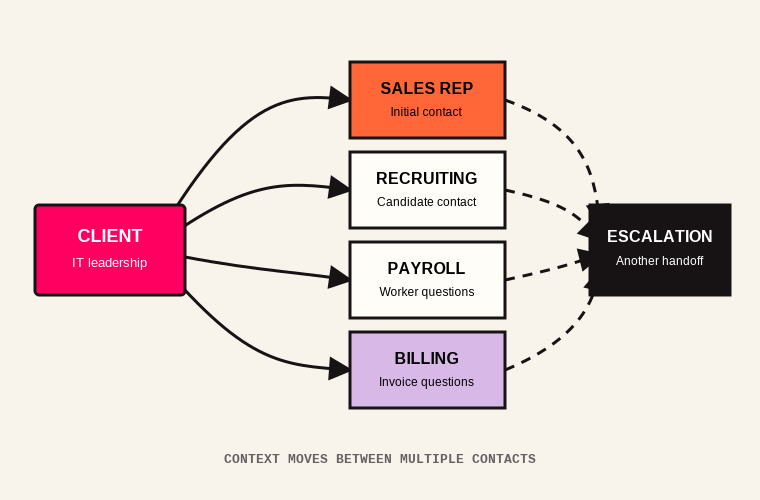
Client questions may be divided across sales, recruiting, payroll, billing and escalation contacts. Context is repeatedly transferred, and responsibility becomes harder to track.
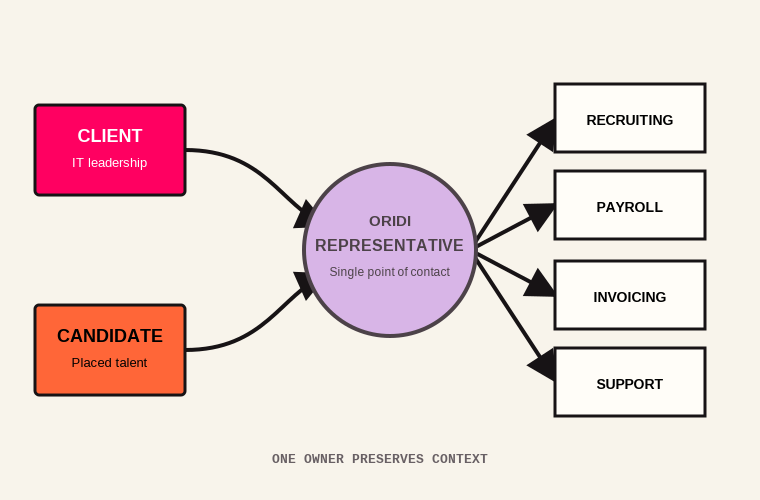
The client and candidate work through one ORIDI representative, who coordinates recruiting, payroll, invoicing and other internal functions without forcing the client through separate channels.
ORIDI maintains general liability, commercial automobile, workers’ compensation, umbrella and technology errors-and-omissions coverage. Current certificates are available to qualified clients upon request.
Background checks through Checkr can be performed when required for selected candidates and client environments.
You do not need a finished job description to begin. A conversation is enough to get started.